
“A friend of Ben is a friend of mine”. It didn’t take much to trigger great memories to the De Standaard podcast festival in Ostend for some of the podcast professionals I have met in New York City. The Ben they are referring to is Ben Van Alboom, who has been taking special care of the overseas guests in the 2022 edition of the festival. He seems to – rightfully – understand the importance of making a good impression during events like these if you want guests to either come back or spread the word about the festival in their midst.
I’ve just spent 12 days in the concrete jungle where dreams are made of. To observe and learn, exchange ideas with podcast professionals and overall get inspired by the New York podcast scene. And – oh surprise – I absolutely loved it.
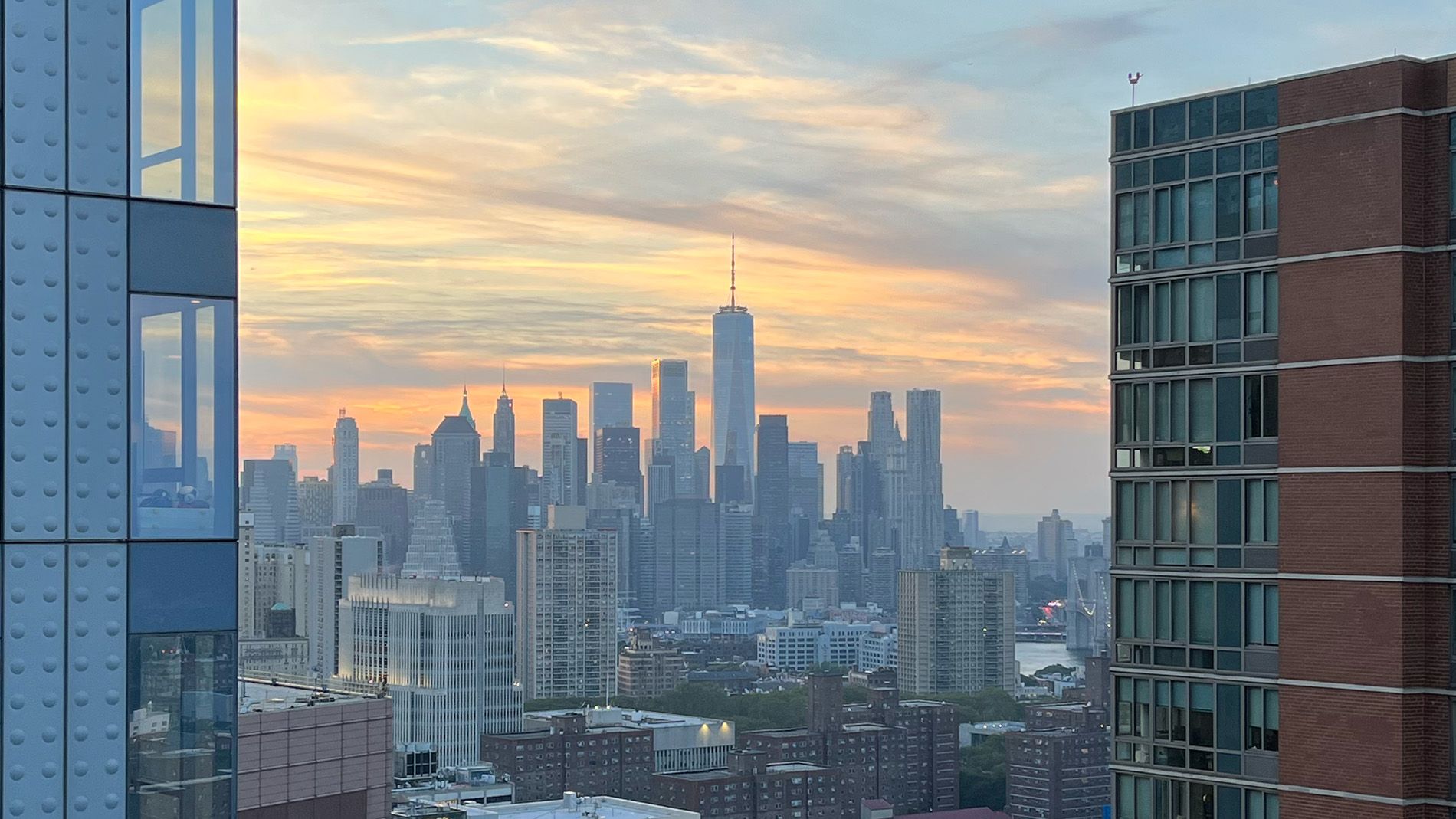
There’s something about the city that drives people to excel. Manhattan being the epicenter of the action with ambitious makers who don’t seem to be scared to take initiatives. Whether that’s starting a brand-new show or reaching out to someone they admire, professionally. Quite the contrast with how shy or reserved many Flemish podcaster seem. In contrary to New Yorkers, Flemish people often need a little push, a little encouragement to take a step. I have no idea why, but it seems to be a cultural thing related to playing it safe rather than risking rejection.
“Welcome to Brooklyn” in Lighters Up by Lil’ Kim hits my eardrums as the subway rolls into Parkside Av, the stop closest to the flat in Brooklyn where I’m staying during this trip, just next to the beautiful Prospect Park.
The size of a park like this has no comparison to European cities I’ve been before. If you’re estimating New York distances and dimensions based on gut feeling while inspecting Google Maps, I can guarantee you that you’re probably off by miles. Try guessing the walking distance from one NY place to another and then see how long Google says it actually takes. If you’ve never visited the city, you’d be surprised.

The efficiency of metro lines B & Q to get from my condo to The Empire State building for example was impressive though. Between 35 and 50 minutes, a direct connection to the center of the action. Except for the weekends, when you could easily watch any average 90-minute movie during a one-way trip. To most Belgians this time to commute within one city sounds bonkers. For reference: if I drive north or south for 1,5 hours from my Belgian home I’m in The Netherlands or France.
I also think I have seen Joe Biden’s butt cheeks. Maybe. His and those of many other world leaders. On September 20th they were visiting the Met Museum, following the United Nations summit. The security measures were insane. I could not be in a block near the entrance of the museum, which explains my doubts about the actual butt cheeks I’ve had a glans at.

Every single street leading to the red carpet was blocked with massive city trucks that made it impossible for anyone with a powerful vehicle to come even remotely close. FBI, secret service, gossiping policemen and women waiting at their stations… I’ve seen it all. Even more entertaining: waiting at one of the roadblocks to hear the New Yorker’s responses to all of this. Besides 80% of the people clueless about what was going on; my favorite response was “maybe Kim Kardashian might show up”.
Let me state it again: I did have a really good time in the city. This includes visiting some iconic landmarks, some great parties and an amazing musical. If you want to know more about some personal experiences, feel free to reach out to me at niels@wajoo.be. But now, let’s talk podcasts.
One of the first people I met upon arrival was Elke Vanhaecke, a NYC based Belgian experienced journalist who’s been living in the city for a while now. I couldn’t have wished for a warmer welcome and more delicious burgers with her family in Brooklyn. Elke took me to see the live recordings of the Design Matters podcast by Debbie Millman in Brooklyn. Debbie was interviewing Jad Abumrad, the founder of Radiolab. Turns our Jad started Radiolab in the early 2000’s when there was room for experimenting on late night WNYC radio. All of this before podcasts were even invented. He was ahead of the curve, as he called it on stage.
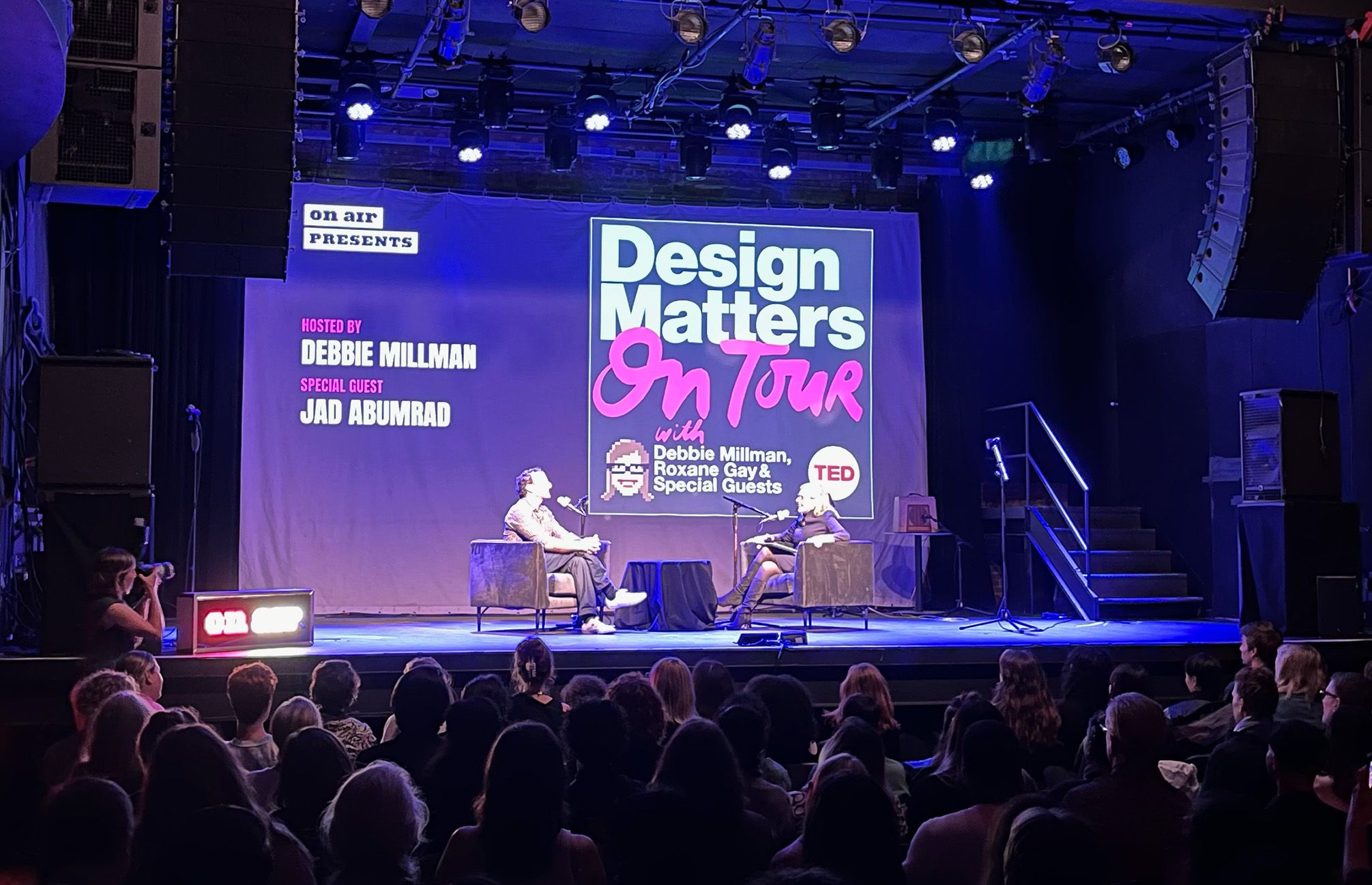
The experimental era he referred to reminds me of my own time at Urgent.FM, the local Ghent radio. This was around 2008, back when servers in the basement were placed on concrete bricks not to soak in case of a flooding. It was the same station where I announced giveaway tickets on air that did not exist, in an improvised, unprepared show intro. Did that get me in trouble? Not at all. None of the few listeners actually cared, they were used to things going wrong or sounding a bit off all the time.
Jad’s talk made me think of the importance of timing. Back when I started my own podcast Creative Minds, back in 2016, I had to constantly explain others what a podcast was. It was a highly unpopular medium, Creative Minds was easily in Apple Podcasts top 10, simply by the lack of other shows with many listeners. Fair to say that, besides Xander De Rycke and some other brave souls like those from Tech45, starting Creative Minds was ahead of the Belgian podcast curve. So… what if I start something new nowadays? In what field or medium should it be if I want to be ahead of the curve again?
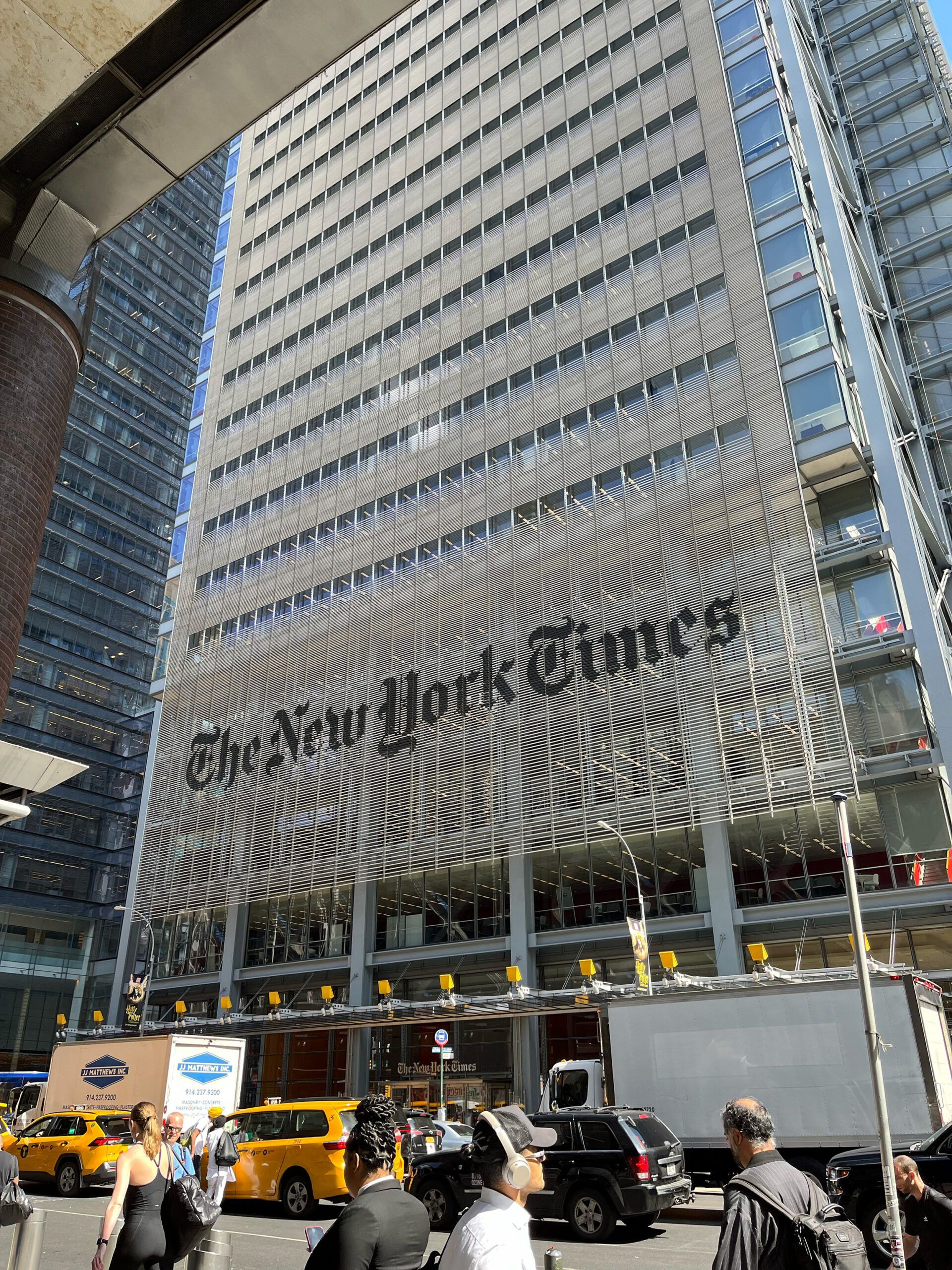
A couple of days later Devon Taylor, senior editor and award winning journalist welcomed me with a smile at The New York Times. With years of experience, previously also at Gimlet Media (ungraciously killed by Spotify in 2023), she’s now part of The Daily. You know, that one show that absolutely no one refers to in journalistic midsts (insert some Friends’ Chandler energy while reading this).
I was surprised about how massive the NYTimes offices are. Many many floors, full of hard-working journalists who huslet their asses of to get a spot at the prestigious newspaper. The podcast studios reminded me a bit of those by NRC newspaper in the Netherlands. A professional setups with great acoustic treating.
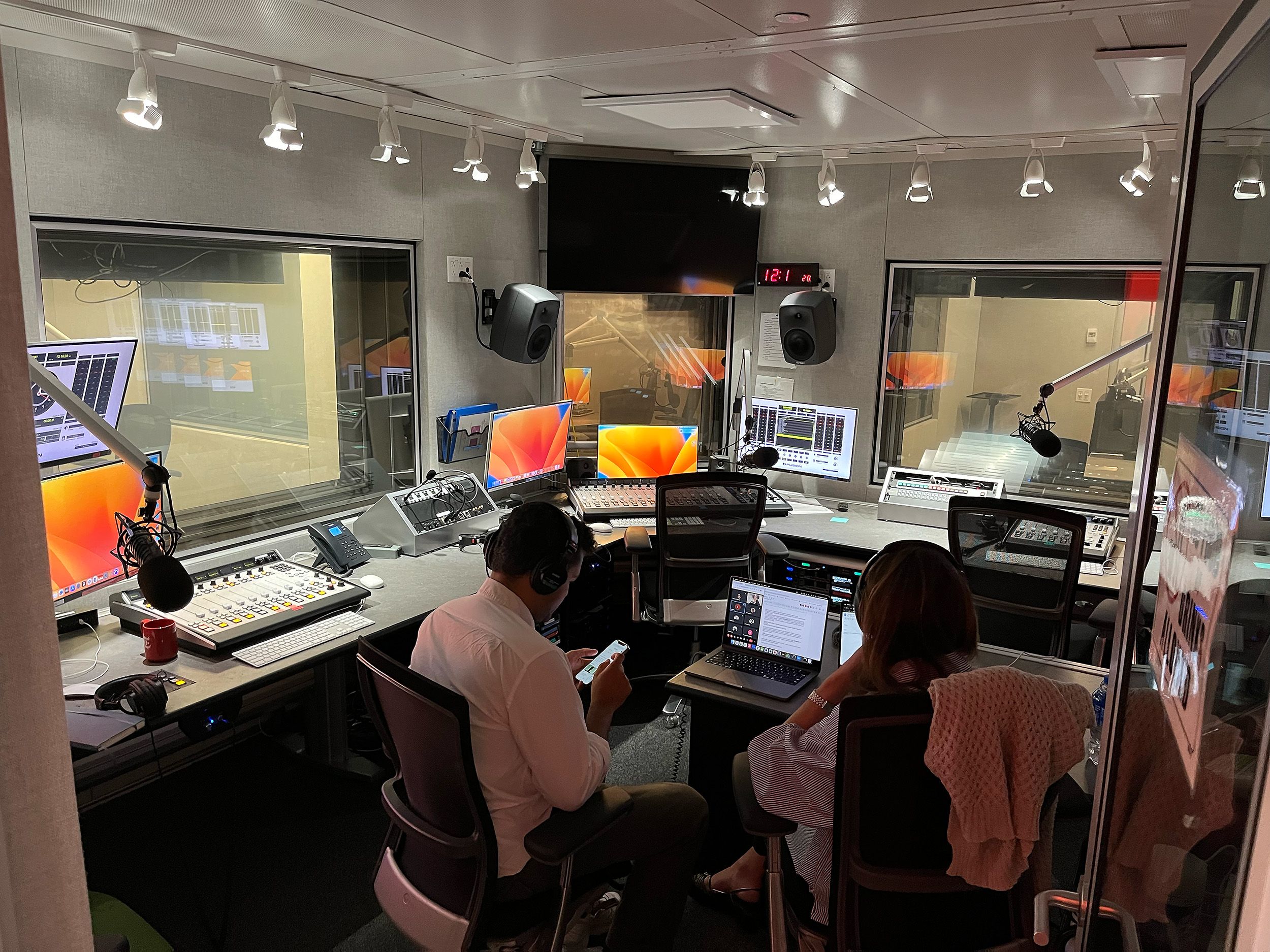
It didn’t take us long to exchange experiences on the how’s and why’s of making an audio story for a newspaper. Speaking from my own experiences, working on the podcasts for De Standaard since 2020, it seems that we see the same challenges. Just to name a few:
- Convincing a journalist to work on a story in audio, rather than written.
- Keeping a conversation clear and spontaneous while working in a news environment, when getting the facts straight in the right context is absolutely essential.
- Refining the pitch and make it work, the purpose of what you’re trying to tell if a topic is rather complex
- Working with scripts versus flowing on gut feeling
And in walks Michael Barbaro. The host of The Daily. A voice known by millions all over the world. As it turns out, Michael is striving for his shows to be as spontaneous as possible. Not a given, knowing the amount of extra dubs, reworks and corrections it takes before a show is released into the world. I would have forgotten about it, but luckily Devon suggested to take a picture of us together.

“You could be father and son”, some friends of mine replied on Instagram. Must be the moustache energy.
It turns out that The New York Times has a dedicted museum section on the top floor of the building, full of relics and journalistic artefacts. Gear used in memorable reportings and investigations, historic pieces that take us back in time and a wall of fame, with US presidents thanking the – now retired – chairman for doing great work. Including the eternal defender of free press: Donald J. Trump.


A day later I found myself playing the piano in the entrance hall of WNYC radio. This is the home of Radiolab. Jad, who I mentioned above, is no longer leading the way at Radiolab. For about 20 years he has set the tone but now Radiolab has grown into its own iconic entity. As he stated himself during the podcast recording with Debbie, other talent is doing great work now with a different perspective on the things that matter.
I’ve met with general manager Sarah Sandbach and senior producer Simon Adler to talk about workflows, challenges and funding. A short visit, but good to get a sense of the workplace and kinda rebellious mindset. Enter: merch.

Later that day I was welcomed by Mike Comité at This American Life. Mike is a senior audio mixer and a passionate musician. Listen to his band on Spotify! Next to Serial (who work on the same floor) This American Life is probably one of the most iconic podcasts in the USA to date.
Another impressive studio setup. Multiple audio booths with great acoustics and live broadcasting equipment that would even make some Belgian radio stations a bit jealous.
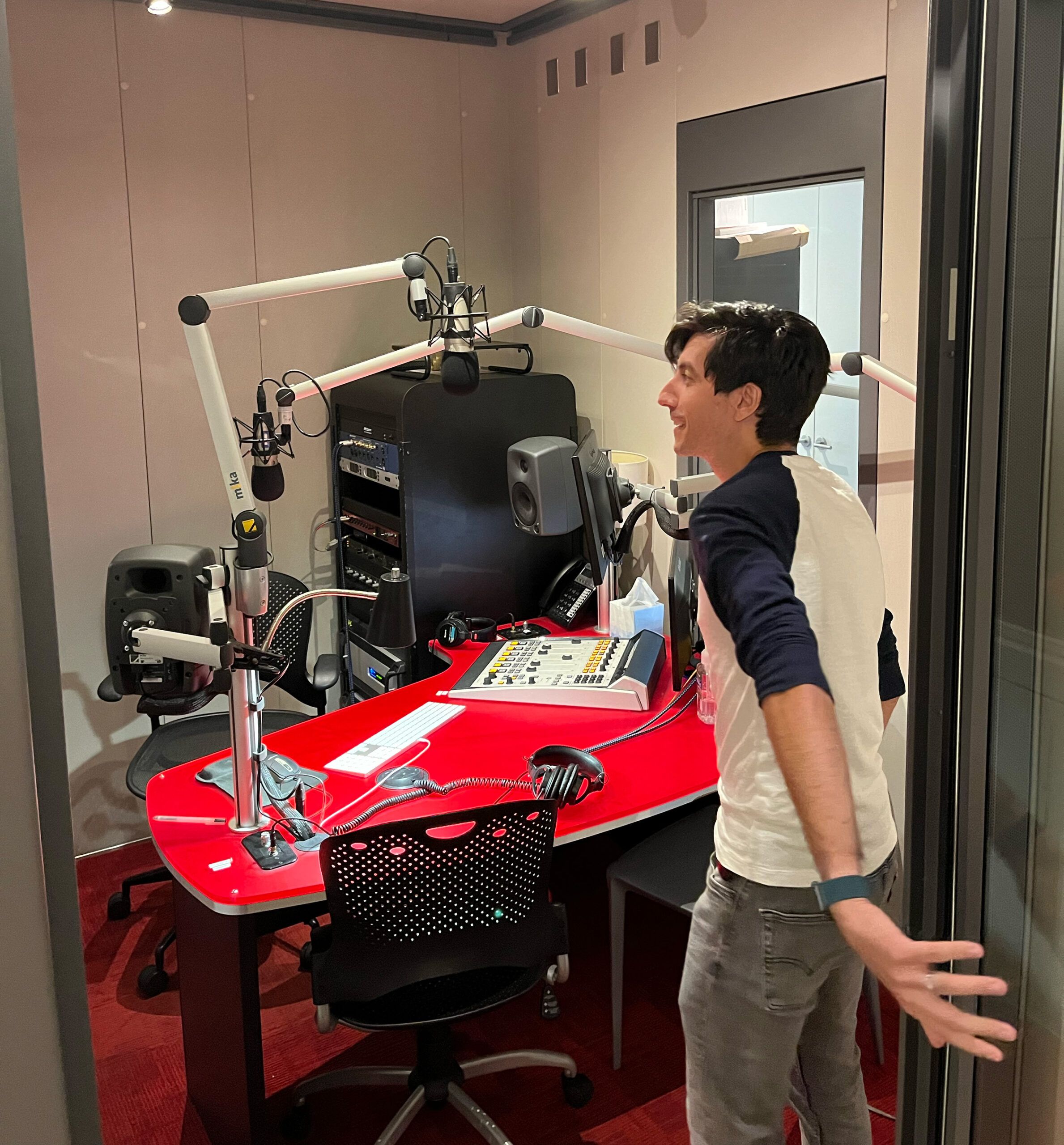

Mike was kind enough to give me a detailled look into the studio workflow. I was impressed by the manual mixing for this show. TALife is basically a “no plugin” operation. This means manually drawing volume automations and working towards the desired LUFS. I won’t get too technical here, but when it comes to the content: every silence, word, sound or music placement is precisely timed and considered. Then reconsidered, tried in a different variation and so on. The number of ears that hear an episode before it gets published was a bit… shocking to me. As well as the amount of reworks.

Ira Glass, being the voice of the show and creative leader in this process, should be seen as an artist rather than a podcast maker. He is so involved in the details of the final product – and I think that is a good thing – that you can sense his strive for perfection in every single episode. I can also imagine it takes some good understanding between all teammates to not get into conflicts about this nitpicking work.
This American Life is a podcast but also gets broadcasted to 10’s of millions of Americans on FM. A delicate undertaking, knowing that every fuck, shit, piss or anything else that’s slighty unholy hits the air waves gets fined by $100.000. A fine for the broadcasting radio station. Needless to say that broadcast licenses and agreements between the show and the networks wouldn’t last long if this would occur a couple of times
The show seems to be well funded. Given the size of the market and reach in the States, it’s no surprise that in comparison I haven’t found a single Flemish show that has funding to pay musicians great non-exclusive licensing fees for the use of music they composed. Did we get a drink after our extended studio session? Of course we did!
And what would a great trip like this be without going for a coffee with another Belgian in New York. After 3 hours of sleep and a good night of dancing I met up with Bjorn Soenens. A highly experienced journalist, writer, podcaster and thé USA correspondent for VRT, the Flemish public broadcaster. If you live in Flanders, Bjorn doesn’t need an introduction.
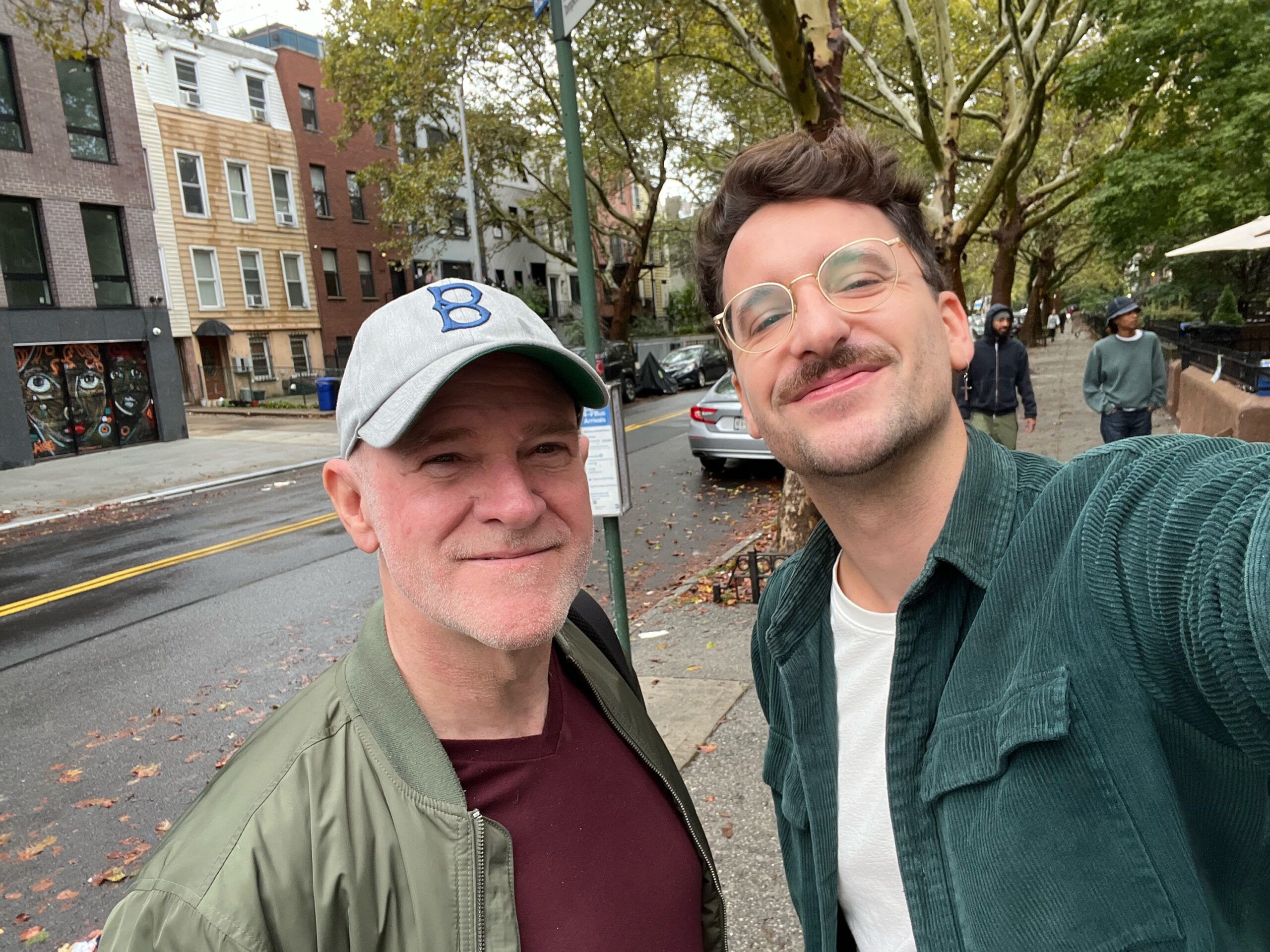
We discussed the role of podcasts in a news environment, the USA podcast market and how it compares to the Flemish one, how they deal (or don’t) with feedback and living and working in the USA.
Bjorn confirmed me something that I already sensed and that Elke Vanhaecke also mentioned before. Most Americans are very open to meet, chat, talk about their work and network. In fact, they are not afraid to be proud about what they do (and they should not be afraid!). But actually going from excitement and good vibes to closing a deal in the USA is harder than it seems. Getting the numbers straight and making agreements is quite the hasstle. Good to know when negotiating an American deal 🙂
If there is something that all of the inspiring NYC people I have met have in common, it’s that they all carry a great sense of pride about what they’re making. They take the time to refine, rework, listen to feedback, make things better, sometimes start over again, ask for more feedback and grow. They reach out to others when they can, they don’t dream small.
No one wants to see the desirable bar (reaching the bar, quality wise) and then kinda reach it. They don’t do an attempt and label it as “good enough”. I share that mindset of striving for high quality. I can’t be proud about something that I know I could have done better.
So as long if I’m creating, I will strive to improve my skills. Collect feedback and grow. Just like the NYC professionals.
It was a pleasure NYC, see you soon.